Wizards’ Council
Fantastic Beasts and Where to Find ThemThe Wizards’ Council was the governing body that preceded the Ministry of Magic. Its history in the account is bound to a difficult political question: which intelligent magical creatures counted as “beings” entitled to legal rights and a voice in magical governance, and which remained “beasts”? The Council’s successive tests for membership—first bodily form, then the ability to speak—proved inadequate in practice. Its debates reveal that classification was not merely a matter of naming creatures: it determined who might be represented, while some communities rejected the offered status and chose separation instead.
Predecessor and authority
The Wizards’ Council preceded the Ministry of Magic and exercised authority over the magical community before the later ministerial system. In the fourteenth century, its Chief, Burdock Muldoon, attempted to settle the boundary between “beings” and “beasts” through a single visible criterion: any member of the magical community who walked on two legs would be recognized as a “being,” while all others would remain “beasts.” The rule made physical form a proxy for political standing, despite the wider question being whether a creature merited rights and a voice in governance.
Muldoon paired that decree with an invitation to participate. In a spirit of friendship, he summoned those deemed “beings” to a summit with wizards to discuss new magical laws. The gathering quickly exposed the mismatch between the Council’s neat rule and the diversity of the communities it sought to include: its meeting hall filled with creatures whose presence and conduct frustrated the intended deliberations. The failure was not simply that the Council had invited too many participants; the threshold itself had mistaken an outward feature for a reliable measure of political or social compatibility.
After the summit, Muldoon was embittered and forswore further attempts to integrate non-wizard members of the magical community into the Council. The episode set a pattern for the institution’s later efforts: formal inclusion could be proposed from above, but a definition that ignored how creatures lived and what they wanted could turn a meeting intended for cooperation into a demonstration of the limits of the governing authority.
Tests for membership
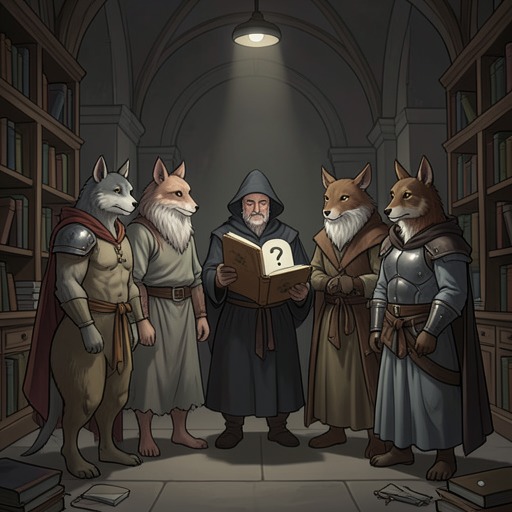
Muldoon’s successor, Madame Elfrida Clagg, tried to replace the bodily test with a linguistic one. She proposed that “beings” were those who could speak human language, hoping to create closer ties with other magical creatures. The Council again invited those who satisfied the definition to attend its next meeting. This attempt made communicative ability, rather than anatomy, the test of eligibility, but it remained a narrow measure: speaking a language intelligible to wizard officials did not ensure that a creature could—or wished to—take part on the Council’s terms.
The second meeting again descended into disruption. Trolls, taught a few simple sentences by goblins, destroyed the hall; Jarveys raced around it. Other exclusions exposed the language test’s arbitrary edges. Merpeople unable to converse in anything except Mermish while above water could not qualify on the proposed terms, even though the issue was not an absence of language but the Council’s choice of which language counted. The repeated failures showed how each definition converted a practical administrative convenience into a boundary around political recognition.
Not until 1811 did a definition gain acceptance across most of the magical community. The newly appointed Minister for Magic, Grogan Stump, defined a “being” as a creature capable of understanding the laws of the magical community and taking responsibility for its own part in making those laws. This moved the test away from a visible bodily trait or a single shared language and toward comprehension and responsibility. Even so, the classification retained consequences for creatures whose intelligence or appearance did not translate into recognized participation: merpeople and centaurs were placed in the “being” category, while goblins and gnomes, despite their humanoid appearance, were categorized as “beasts.”
Classification and administration
The Council’s debates belong to a longer institutional effort to sort magical creatures into categories with different standing. Stump’s accepted definition did not end disagreement over who should be recognized, but it became the foundation for a more differentiated administrative arrangement. Ghosts objected to being classified as “beings,” arguing that they were plainly “has-beens.” In response, Stump established three divisions within the Department for the Regulation and Control of Magical Creatures: the Beast Division, the Being Division, and the Spirit Division. The resulting structure acknowledged that a two-category scheme could not comfortably accommodate every community, although administrative classification still did not guarantee that a group accepted the status assigned to it.
The broader system also linked classification and creature management to concealment, care, control, and trade. In 1750, Clause 73 was inserted into the International Code of Wizarding Secrecy, assigning each wizarding governing body responsibility for magical beasts, beings, and spirits within its territory. The Department for the Regulation and Control of Magical Creatures became the Ministry of Magic’s second-largest department, dealing with the varied needs of magical creatures and with those that remained conspicuous to Muggles. Its work included controls on the sale and breeding of fantastic beasts; the 1965 Ban on Experimental Breeding made the creation of new species illegal. These later measures are not presented as decisions of the Wizards’ Council itself, but they show the administrative world that developed after its earlier struggles to define categories and responsibilities.
Classification also had practical consequences for safety and territory. In extreme cases involving creatures such as the Quintaped, whole areas were made unplottable; some safe areas required constant wizarding protection. Such arrangements illustrate the range of interests folded into creature governance: secrecy from Muggles, protection of communities, and control of dangerous or conspicuous creatures. The Council’s early question of who counted as a “being” thus sits beside a later, more extensive apparatus concerned not only with status but with habitat, visibility, trade, and risk.
Recognition and self-government
Being classified as a “being” did not necessarily mean accepting the Council’s proposed relationship with wizard government. Centaurs objected to sharing that status with creatures such as hags and vampires and declared that they would manage their own affairs separately from wizards. Merpeople made the same request a year later. The Ministry of Magic accepted the demands reluctantly. These decisions mark a significant limit to the logic of inclusion: recognition could be offered by an authority, but self-government was a claim communities could make for themselves, including a refusal to participate in the political grouping offered to them.
The institutional response remained in place even when the relevant community did not use it. A Centaur Liaison Office existed in the Beast Division of the Department for the Regulation and Control of Magical Creatures, but no centaur ever used it. Within the department, “being sent to the Centaur Office” became an in-joke meaning that the person sent there was about to be fired. The joke turns a formal instrument of liaison into a sign of bureaucratic failure: an office can exist on paper without producing a relationship with the people it is meant to represent.
The Council’s legacy is therefore less a final settlement than a record of repeated boundary-making and its consequences. Muldoon’s two-legged rule and Clagg’s language test each promised a simple route into political membership, yet their meetings exposed the exclusions and disruptions those rules could produce. Stump’s definition and the three departmental divisions offered a more durable administrative framework, but the later demands of centaurs and merpeople show that classification could not settle questions of consent or jurisdiction. The Council’s history makes visible a lasting tension in magical governance: institutions can define categories and create offices, but recognition is not the same as representation, and representation is not the same as self-rule.